Market Reports · August 31, 2026
Former Al Capone Palm Island Estate Site Sells for $21 Million
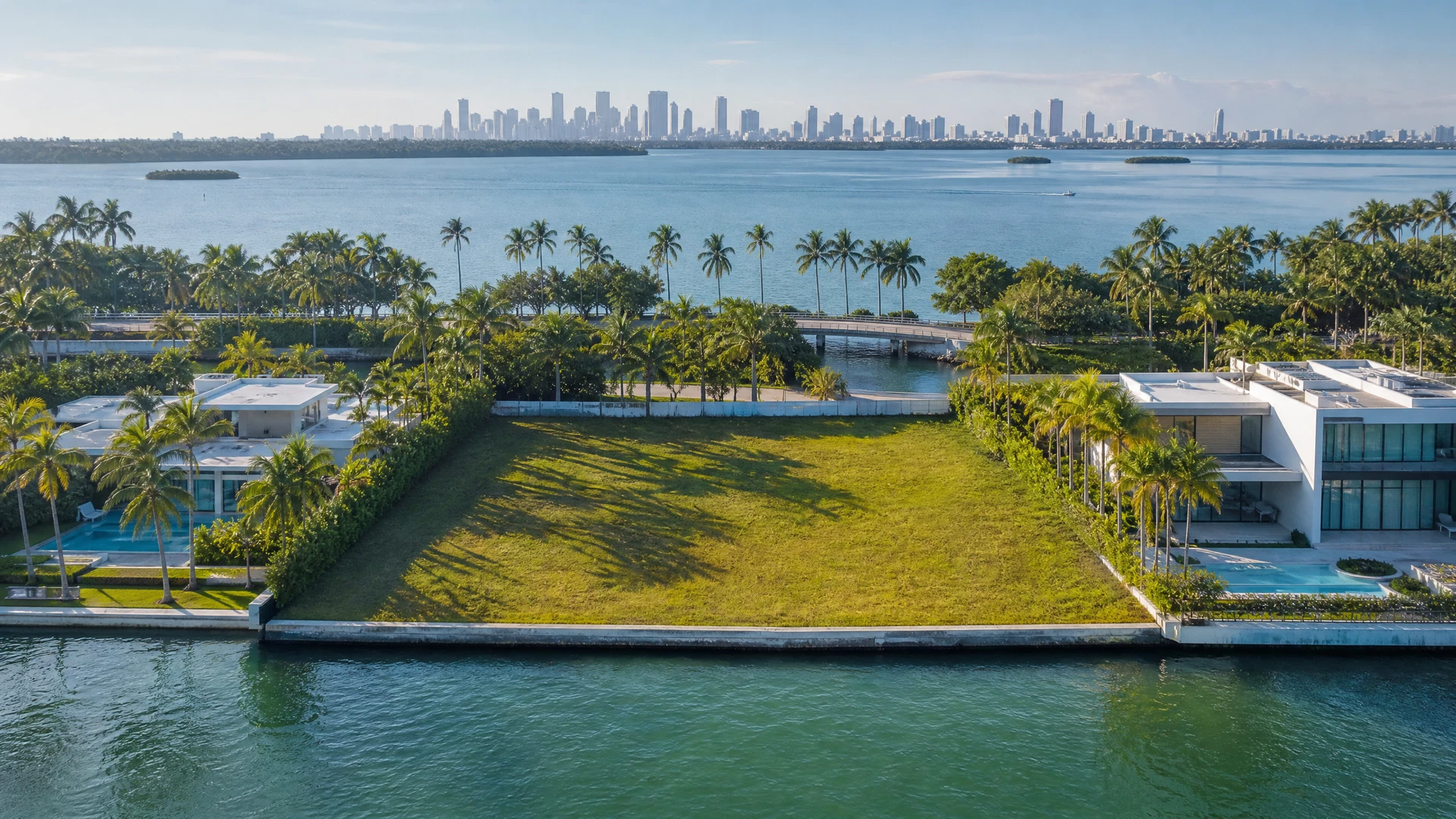
A vacant waterfront parcel at 93 Palm Avenue—the former site of Al Capone's Palm Island home—has traded for $21 million. The story is now about scarce bayfront land, redevelopment, and a Miami Beach address whose history still shapes its value.
By Condo Invest Miami Research · Editorial & market research · 4 min read
A Waterfront Sale Where the House Is No Longer the Story
The vacant parcel at 93 Palm Avenue on Palm Island has traded for $21 million, opening a new chapter for one of Miami Beach's most recognizable residential addresses. The property once held the longtime Palm Island residence associated with Al Capone, but the century-old house was demolished in 2023. What changed hands in this sale was not a preserved historic estate; it was a rare bayfront redevelopment opportunity.
For the current buyer, the value proposition is straightforward: approximately 30,000 square feet of land, 100 feet of Biscayne Bay frontage, and an address inside one of Miami Beach's most private island communities. The public record and contemporary reporting point to a purchase price $5.5 million above the property's reported 2021 sale, a 30% increase before any new home has been delivered.
What the $21 Million Transaction Includes
Detail · Reported Context
--- · ---
Address · 93 Palm Avenue, Palm Island, Miami Beach
Sale · $21 million, reported to have closed in August 2026
Current asset · Vacant waterfront parcel after the 2023 demolition
Land and water · Approximately 30,000 square feet with 100 feet of bay frontage
Previous reported sale · $15.5 million in 2021
The sale reflects how the top end of Miami Beach pricing is increasingly driven by irreplaceable land rather than existing improvements. On Palm Island, a buyer is acquiring privacy, water exposure, controlled access, and the flexibility to build for a contemporary luxury market. In that context, the history of the address strengthens its story, while the blank site creates its future.
From Capone Residence to Vacant Development Site
The original Mediterranean-style home was built in 1922. Historical accounts place Al Capone at the property from 1928 until his death in 1947; his family retained it until 1952. Over the decades, the residence became one of the most discussed surviving links to a particular era of Miami Beach history.
That history did not preserve the house. The prior owners demolished the residence in 2023 following a prolonged preservation debate. Today, the site should be understood as an empty waterfront parcel with historic provenance, not as an intact Capone home. That distinction matters for buyers evaluating the opportunity: the premium is attached to the location, shoreline, privacy and redevelopment potential—not to a surviving historic structure.
Why This Sale Matters for Palm Island
Scarcity is the key variable on Palm and Hibiscus Islands. There are few waterfront parcels, limited opportunities to combine land or start from a blank architectural canvas, and a buyer pool that can absorb substantial acquisition and construction costs. High land prices therefore influence the likely scale and quality of what follows.
The transaction also illustrates an increasingly familiar Miami Beach pattern. A property can carry cultural history, generate a preservation conversation, and still ultimately be repriced according to the economics of new luxury construction. The next residence at 93 Palm Avenue will likely be judged by a different set of standards: waterfront design, indoor-outdoor living, security, dock or marine potential where permitted, and the execution quality expected at the top of the market.
What a Buyer Should Verify Before Treating a Historic Address as an Investment
For prospective buyers, a well-known address should not replace customary land due diligence. The future owner must confirm zoning, setbacks, flood requirements, seawall and shoreline conditions, construction costs, permitting pathway, title, easements, historic-designation status and all applicable local approvals. Those issues determine what can actually be built and when.
The sale at 93 Palm Avenue is best read as a signal of continuing demand for one-of-one waterfront sites in Miami Beach. It also shows why a headline number rarely tells the whole investment story. The acquisition price is only the entry point; the project that follows will determine the property's next benchmark.
Sources
- PROFILEmiami: Former Site of Al Capone's Historic Palm Island Estate Sells for $21 Million
- Miami Herald: This Miami Beach lot was once home to gangster Al Capone. It just sold for $21M
- Miami History: Capone's Palm Island Villa
Reporting note: This is an original market analysis based on published reporting and historical research. Sale, land, waterfront, zoning, permitting, title, construction and redevelopment details should be independently verified before any purchase decision.
Frequently Asked Questions
Did Al Capone's original Palm Island house sell for $21 million?
No. The historic residence at 93 Palm Avenue was demolished in 2023. The reported 2026 transaction involved the vacant waterfront site where that residence once stood.
Where is the former Capone Palm Island property?
The site is at 93 Palm Avenue on Palm Island in Miami Beach, with reported Biscayne Bay frontage.
How much did the Palm Island site sell for?
Published reporting stated that the vacant parcel traded for $21 million in August 2026. Buyers should independently confirm all sale details through appropriate public records and advisers.
Why is vacant land on Palm Island valuable?
Waterfront land is scarce on Palm Island. A vacant site can offer design flexibility, privacy, bay frontage, and the potential to create a new contemporary estate, subject to zoning, permitting and construction constraints.
What should a buyer verify before buying a Miami Beach waterfront lot?
A buyer should verify zoning, setbacks, flood and elevation requirements, seawall condition, title, easements, permits, construction costs, insurance and all local approvals with qualified advisers.